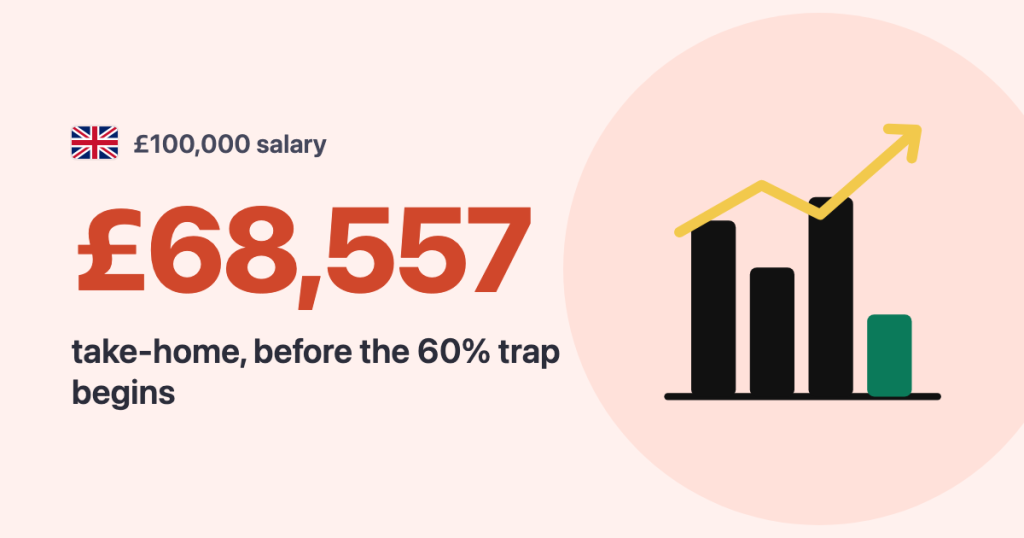
£100,000 is the salary where the UK tax system gets strange. At exactly £100,000 you keep £68,557 a year: £5,713 a month. But every pound you earn above it is taxed at an effective 60% (62% with National Insurance) until £125,140. This guide explains the trap and the legal ways out.
£100k take-home pay
| Pay period | Before tax | Take-home |
|---|---|---|
| Year | £100,000 | £68,557 |
| Month | £8,333 | £5,713 |
| Fortnight | £3,846 | £2,637 |
| Week | £1,923 | £1,318 |
| Hour (40-hour week) | £48.08 | £32.96 |
| Per year | |
|---|---|
| Gross salary | £100,000 |
| Income Tax | £27,432 |
| National Insurance | £4,011 |
| Take-home pay | £68,557 |
| Total tax & contributions | £31,443 |
The £100k tax trap
Your £12,570 Personal Allowance shrinks by £1 for every £2 you earn over £100,000. At £125,140 it is gone completely. So each extra £1 between £100,000 and £125,140 costs 40p in higher-rate tax plus 20p of tax on allowance you just lost, which is 60% Income Tax plus 2% National Insurance.
| Salary | Income Tax | Take-home | Kept from the last £10k |
|---|---|---|---|
| £100,000 | £27,432 | £68,557 | – |
| £110,000 | £33,432 | £72,357 | £3,800 |
| £125,140 | £42,516 | £78,111 | – |
A £10,000 rise from £100,000 to £110,000 adds just £3,800 to your take-home. If you have young children, crossing £100,000 also costs you tax-free childcare and the funded childcare hours, which are only available while adjusted net income is £100,000 or less. For some parents that is worth thousands more.
How to avoid it: pension contributions
The trap is based on adjusted net income, which is reduced by pension contributions. On a £110,000 salary, sacrificing £10,000 into your pension brings you back to £100,000:
| No pension | £10,000 salary sacrifice | |
|---|---|---|
| Take-home pay | £72,357 | £68,557 |
| Pension pot gets | £0 | £10,000 |
| Real cost of £10k in your pension | – | £3,800 |
You put £10,000 into your pension for a take-home cost of only £3,800, an effective 62% saving. Gift Aid donations also reduce adjusted net income.
Scotland at £100,000
Scottish rates (42% higher, 45% advanced from £75,000) mean £30,732 Income Tax and take-home of £65,257, £3,300 less than in England. In Scotland, the trap band is effectively taxed at 67.5% plus NI.
A monthly budget on £100,000
The popular 50/30/20 rule splits take-home pay into needs (housing, bills, groceries, transport), wants (eating out, travel, subscriptions) and savings or debt repayment. On £5,713 a month it looks like this:
| Share | Per month | |
|---|---|---|
| Needs | 50% | £2,857 |
| Wants | 30% | £1,714 |
| Savings & debt | 20% | £1,143 |
If rent alone is more than £2,000 a month (about 35% of take-home), the needs bucket will be tight and savings usually suffer first.
How much house can you afford on £100,000?
With a £60,000 deposit, no other debts and a 4.5% mortgage rate, lenders would typically let you buy a home of up to about £510,000. That is based on a 4.5× income multiple. The monthly cost would be around £2,501, which is 44% of your take-home pay.
Change the deposit, debts or rate in our house affordability calculator for £100,000, then check the payment with the mortgage calculator.
Frequently asked questions
How much is £100k after tax per month?
£5,713 a month in England, Wales or Northern Ireland and £5,438 in Scotland in 2026/27, with no pension or student loan.
What is the 60% tax trap?
Between £100,000 and £125,140 of adjusted net income your Personal Allowance is withdrawn at £1 for every £2, so the effective Income Tax rate is 60%.
Does a pension contribution get me out of the trap?
Yes. Salary sacrifice, and personal contributions with relief at source (grossed up), reduce adjusted net income.
Is £100,000 a good salary in the UK?
Yes. It puts you among the top few percent of UK earners. But because of the trap, a rise above it is worth much less than you might expect.