UK Salary After Tax Calculator (2026-27)
Enter your salary to see exactly what lands in your bank account after Income Tax, National Insurance, student loan repayments and pension contributions for the 2026/27 tax year. Scottish taxpayers get the Scottish rates automatically.
Updated for the 2026-27 tax year · Rates checked 14 October 2026
| Gross salary | £45,000 |
|---|---|
| Income Tax | £6,486 |
| National Insurance | £2,594 |
| Take-home pay | £35,920 |
| Total tax & contributions | £9,080 |
| Effective tax rate | 20.2% |
| Marginal tax rate | 28.0% |
- On a £45,000 salary you take home £35,920 a year, or £2,993 a month.
- You pay 20.2% of your income in tax and contributions overall, and 28.0% on each extra £1 you earn.
Your result, explained
On a salary of £45,000 you keep £35,920 a year, which is £2,993 a month or £1,382 every two weeks. In total £9,080 goes on tax and contributions, an effective rate of 20.2%. The biggest single deduction is income tax at £6,486.
The number that matters for decisions is your marginal rate: 28.0%. That means a £5,000 raise would add only about £3,600 to your take-home pay, while every £1,000 you move into a tax-advantaged retirement account costs you only about £720 of spending money.
Your pay by period
| Per | Gross | Tax & contributions | Take-home |
|---|---|---|---|
| Year | £45,000 | £9,080 | £35,920 |
| Month | £3,750 | £756.70 | £2,993 |
| Two weeks | £1,731 | £349.25 | £1,382 |
| Week | £865.38 | £174.62 | £690.76 |
| Day | £173.08 | £34.92 | £138.15 |
| Hour | £21.63 | £4.37 | £17.27 |
By nation
Popular amounts
- £20,000£17,920
- £25,000£21,520
- £30,000£25,120
- £35,000£28,720
- £40,000£32,320
- £45,000£35,920
- £50,000£39,520
- £55,000£42,457
- £60,000£45,357
- £65,000£48,257
- £70,000£51,157
- £75,000£54,057
- £80,000£56,957
- £85,000£59,857
- £90,000£62,757
- £95,000£65,657
- £100,000£68,557
- £105,000£70,457
- £110,000£72,357
- £115,000£74,257
- £120,000£76,157
- £125,000£78,057
- £130,000£80,686
- £135,000£83,336
- £140,000£85,986
- £145,000£88,636
- £150,000£91,286
- £160,000£96,586
- £170,000£101,886
- £180,000£107,186
- £190,000£112,486
- £200,000£117,786
- £210,000£123,086
- £220,000£128,386
- £230,000£133,686
- £240,000£138,986
- £250,000£144,286
How UK take-home pay is calculated
Your employer deducts tax through PAYE. For 2026/27 the first £12,570 you earn is your tax-free Personal Allowance. In England, Wales and Northern Ireland you then pay 20% on the next £37,700, 40% up to £125,140 and 45% above that.
On top of Income Tax you pay Class 1 National Insurance: 8% on earnings between £12,570 and £50,270, and 2% on everything above.
Scottish Income Tax
If you live in Scotland, your Income Tax uses six bands instead of three: 19% starter, 20% basic, 21% intermediate, 42% higher, 45% advanced and 48% top rate. National Insurance is the same everywhere in the UK.
The £100,000 tax trap
Your Personal Allowance shrinks by £1 for every £2 of income over £100,000 and disappears completely at £125,140. In that band you effectively pay 60% Income Tax on each extra pound (62% with National Insurance). Salary-sacrifice pension contributions reduce the income used for this test. Try the pension field above to see the effect.
Student loans
Repayments are 9% of earnings above your plan’s threshold: £26,900 for Plan 1, £29,385 for Plan 2, £33,795 for Plan 4 and £25,000 for Plan 5. Postgraduate loans take 6% above £21,000, on top of any undergraduate plan.
Frequently asked questions
How much tax do I pay on £30,000?
On £30,000 in England you pay £3,486 Income Tax and £1,394.40 National Insurance, leaving take-home pay of £25,119.60 a year (about £2,093 a month).
Is National Insurance charged on my whole salary?
No. Employees pay nothing on the first £12,570, 8% between £12,570 and £50,270, and 2% above £50,270.
Does a pension reduce my tax?
Yes. With salary sacrifice, your pension comes out before tax and National Insurance, so both fall. With relief at source, you get tax relief but not the National Insurance saving. This calculator models salary sacrifice.
What tax code does this assume?
The standard 1257L code (a £12,570 Personal Allowance) with no benefits in kind or underpaid tax being collected.
Guides
 UKUK Income Tax and National Insurance 2026/27: The Complete GuideHow UK tax on your salary works in 2026/27: the Personal Allowance, tax bands in England, Wales, NI and Scotland, National Insurance,…
 USHow US Paycheck Taxes Work in 2026: The Complete GuideEverything taken out of a US paycheck in 2026, explained in plain English: federal brackets, the standard deduction, Social Security, Medicare, state…
 UKScotland vs England Income Tax 2026/27: Who Pays More at Every Salary?Scotland’s six tax bands mean lower earners pay slightly less than in England and higher earners pay noticeably more. Side-by-side take-home pay…
 UKSalary Sacrifice Pension: How Much Do You Really Save? (UK 2026/27)Salary sacrifice cuts both Income Tax and National Insurance on pension contributions. Worked examples at £60,000 show £100 into your pension can…
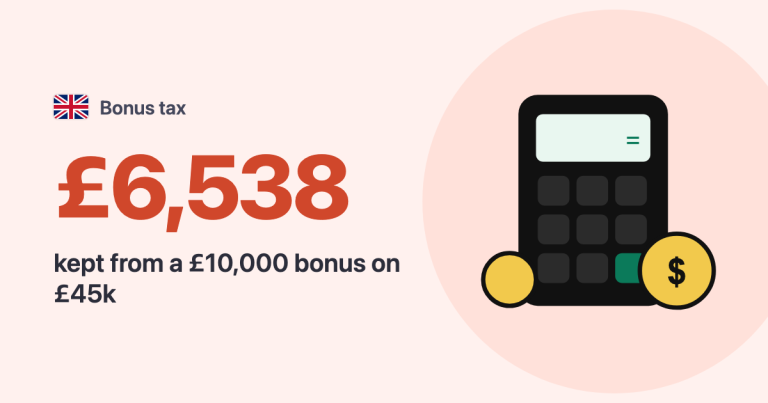 UKHow Much Tax Will I Pay on My Bonus in the UK?A UK bonus is taxed through PAYE at your marginal rate, with National Insurance too. Worked example: what a £10,000 bonus on…
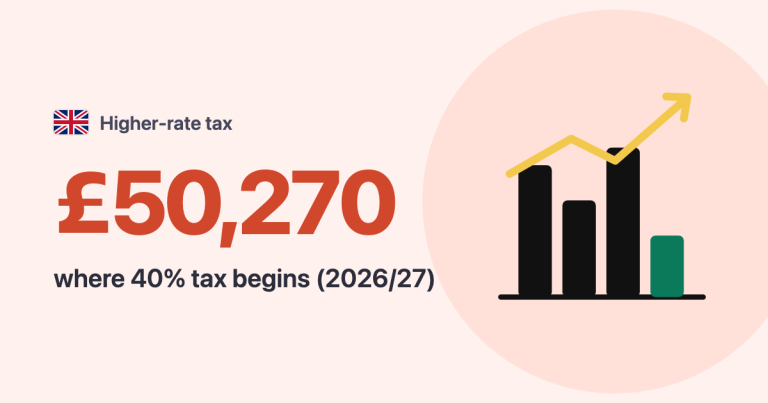 UKAt What Salary Do You Pay 40% Tax in the UK? (2026/27)The 40% higher rate starts at £50,271 in England, Wales and Northern Ireland, and 42% applies from £43,663 in Scotland. What it…