There is no special “bonus tax” in the UK. Your bonus is added to your pay in the month you get it, and taxed through PAYE at your marginal rate with National Insurance on top. The catch is that a bonus can push part of your income into a higher band.
Example: £10,000 bonus on a £45,000 salary
| Salary only | Salary + £10,000 bonus | |
|---|---|---|
| Income Tax | £6,486 | £9,432 |
| National Insurance | £2,594.40 | £3,110.60 |
| Take-home | £35,920 | £42,457 |
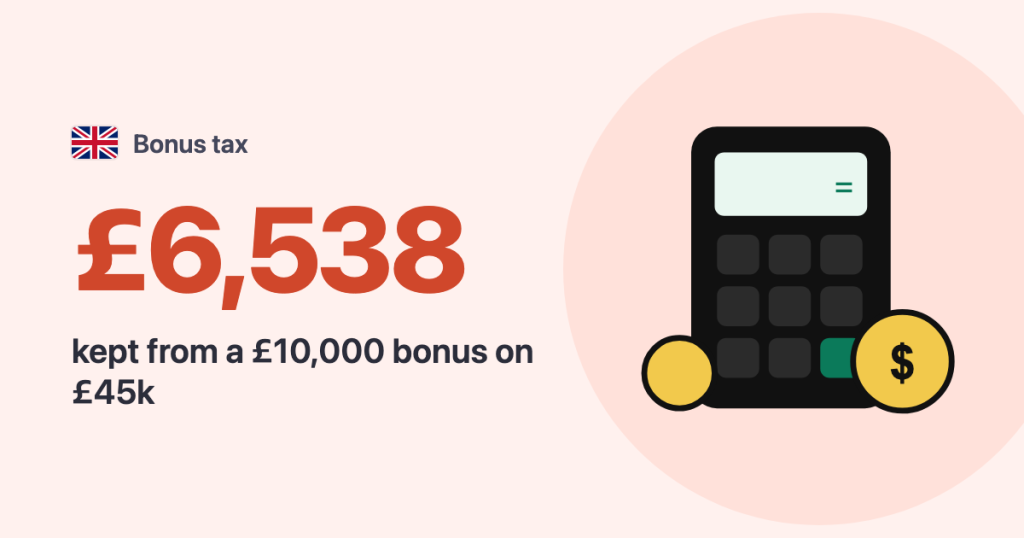
Of the £10,000 bonus you keep £6,538. The first £5,270 is taxed at 20% + 8% NI, and the rest at 40% + 2%, because it crosses the £50,270 higher-rate threshold.
Why the payslip looks worse than this
PAYE treats the bonus month as if you earned that much every month, so it can over-deduct in that month. Over a full tax year it usually corrects itself through your tax code. If it doesn’t, HMRC refunds the overpayment after the year ends.
Bonus sacrifice: put it in your pension
Many employers let you swap a bonus for a pension contribution before it is paid. Sacrificing the whole £10,000 means the pension receives the full amount, compared with £6,538 in cash. Your take-home stays at £35,920. Some employers also add the 15% employer NI they save.
Frequently asked questions
Is a bonus taxed at 40%?
Only the part of it that takes your total income for the year above £50,270 (or £43,662 in Scotland). The rest is taxed at your usual rate.
Do I pay National Insurance on a bonus?
Yes. Bonuses are earnings for NI: 8% up to £50,270 a year and 2% above.
Will a bonus over £100,000 cost me my Personal Allowance?
If it takes your adjusted net income above £100,000, yes: you enter the 60% trap. A pension sacrifice can prevent this.