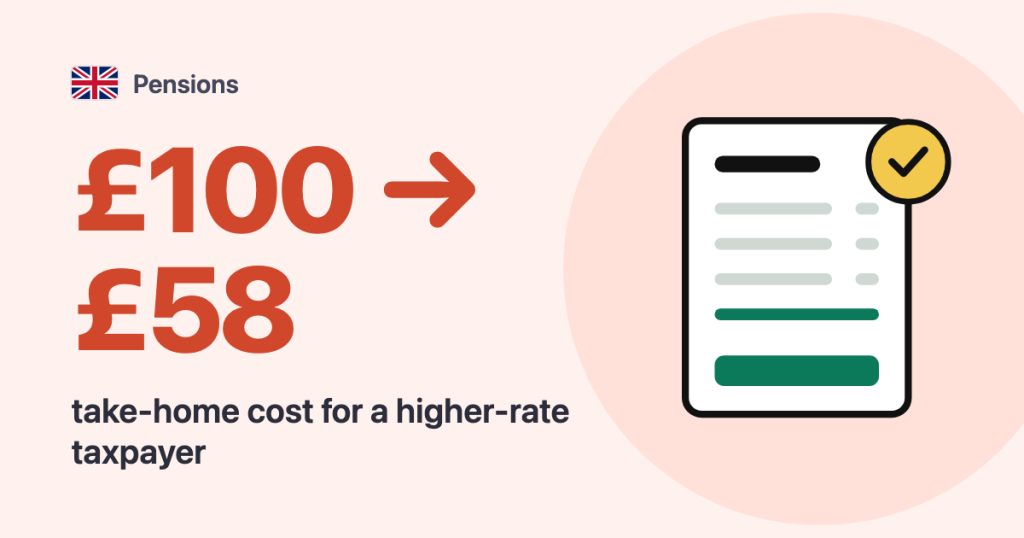
With salary sacrifice you agree to a lower salary, and your employer pays the difference straight into your pension. Because the money never counts as your pay, you save Income Tax and National Insurance. A higher-rate taxpayer can put £100 into a pension for about £58 of take-home pay.
Worked example on £60,000
| No pension | 5% sacrifice | 10% sacrifice | |
|---|---|---|---|
| Into your pension | £0 | £3,000 | £6,000 |
| Income Tax | £11,432 | £10,232 | £9,032 |
| National Insurance | £3,210.60 | £3,150.60 | £3,090.60 |
| Take-home | £45,357 | £43,617 | £41,877 |
| Cost of each £100 saved | – | £58.00 | £58.00 |
At £60,000, every sacrificed pound below £60,000 and above £50,270 would have lost 40% tax and 2% NI, so it costs you 58p. Below £50,270 the saving is 20% + 8%, so 72p per pound.
Salary sacrifice vs relief at source
- Salary sacrifice: saves Income Tax and National Insurance immediately. Some employers share their 15% NI saving too.
- Relief at source (most personal pensions): you pay from net pay, the provider adds 20%, and higher-rate taxpayers claim the extra back. No NI saving.
Things to check first
- Your salary must not fall below the National Minimum Wage.
- A lower contractual salary can affect mortgage applications and some salary-linked benefits.
- The government has announced that from April 2029, NI relief on salary-sacrificed pension contributions will be limited to the first £2,000 a year. Income Tax relief is unaffected.
Frequently asked questions
Is salary sacrifice worth it?
For most employees, yes. It is the cheapest way to save into a pension because you avoid NI as well as Income Tax.
Does salary sacrifice reduce my student loan repayments?
Yes. Repayments are based on earnings after the sacrifice.
Can salary sacrifice get me out of the £100k trap?
Yes. Sacrificing income above £100,000 restores your Personal Allowance and can save up to 62% on that slice.