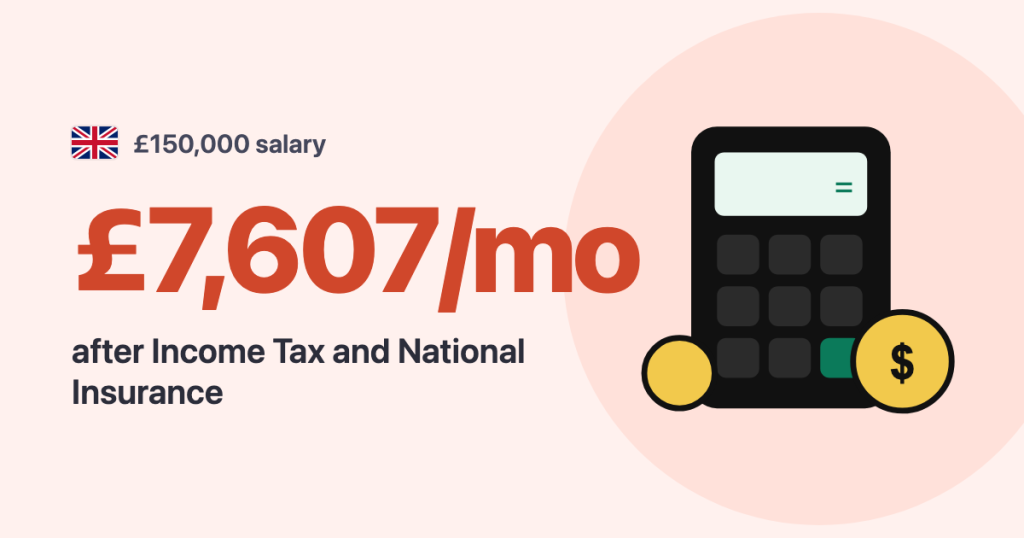
On £150,000 you are past the 60% trap and into the additional rate. In 2026/27 you take home £91,286, or £7,607 a month, in England, Wales or Northern Ireland, and £85,355 in Scotland. Here’s the breakdown and the decisions that matter at this level.
Take-home at £150k
| Pay period | Before tax | Take-home |
|---|---|---|
| Year | £150,000 | £91,286 |
| Month | £12,500 | £7,607 |
| Fortnight | £5,769 | £3,511 |
| Week | £2,885 | £1,756 |
| Hour (40-hour week) | £72.12 | £43.89 |
| Per year | |
|---|---|
| Gross salary | £150,000 |
| Income Tax | £53,703 |
| National Insurance | £5,011 |
| Take-home pay | £91,286 |
| Total tax & contributions | £58,714 |
Why there is no tax-free allowance
Above £125,140 your Personal Allowance is fully withdrawn, so every pound is taxable. Tax works out as 20% on the first £37,700, 40% up to £125,140, and 45% on the last £24,860, which totals £53,703. National Insurance is 8% up to £50,270 and 2% on the rest: £5,010.60.
England vs Scotland at £150,000
| England, Wales, NI | Scotland | |
|---|---|---|
| Income Tax | £53,703 | £59,634 |
| National Insurance | £5,011 | £5,011 |
| Take-home | £91,286 | £85,355 |
| Top rate on the next £1 | 45% + 2% NI | 48% + 2% NI |
Pensions at this income
A 10% salary-sacrifice pension (£15,000) costs only £7,950 of take-home, because each sacrificed pound would otherwise have been taxed at 47%. If you go further and bring adjusted net income below £125,140 (or £100,000), you start winning back your Personal Allowance, worth up to 60% relief on that slice.
Watch the annual allowance: the standard limit is £60,000 a year including employer contributions. It only tapers for people with adjusted income above £260,000.
A monthly budget on £150,000
The popular 50/30/20 rule splits take-home pay into needs (housing, bills, groceries, transport), wants (eating out, travel, subscriptions) and savings or debt repayment. On £7,607 a month it looks like this:
| Share | Per month | |
|---|---|---|
| Needs | 50% | £3,804 |
| Wants | 30% | £2,282 |
| Savings & debt | 20% | £1,521 |
If rent alone is more than £2,663 a month (about 35% of take-home), the needs bucket will be tight and savings usually suffer first.
How much house can you afford on £150,000?
With a £90,000 deposit, no other debts and a 4.5% mortgage rate, lenders would typically let you buy a home of up to about £765,000. That is based on a 4.5× income multiple. The monthly cost would be around £3,752, which is 49% of your take-home pay.
Change the deposit, debts or rate in our house affordability calculator for £150,000, then check the payment with the mortgage calculator.
Frequently asked questions
How much is £150k a month after tax?
£7,607 a month in England, Wales or Northern Ireland, and £7,113 in Scotland.
What tax rate do I pay on £150,000?
Your top rate is 45% (48% in Scotland) on income over £125,140, plus 2% National Insurance. Your overall effective rate is 39.1%.
Do I get a Personal Allowance on £150,000?
No. It is completely withdrawn once adjusted net income reaches £125,140.