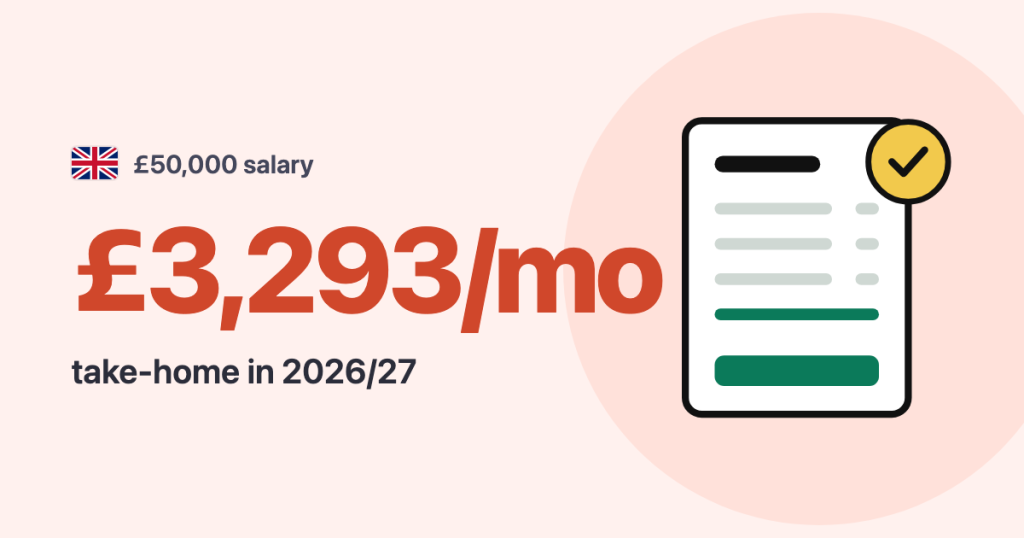
A £50,000 salary sits just under one of the most important lines in the UK tax system: the £50,270 higher-rate threshold. That means every pound you earn is taxed at the basic rate. In 2026/27 you take home £39,520 a year, £3,293 a month in England, Wales or Northern Ireland. Scottish taxpayers keep £38,024.
£50k after tax: monthly, weekly and hourly
| Pay period | Before tax | Take-home |
|---|---|---|
| Year | £50,000 | £39,520 |
| Month | £4,167 | £3,293 |
| Fortnight | £1,923 | £1,520 |
| Week | £962 | £760 |
| Hour (40-hour week) | £24.04 | £19.00 |
How it’s worked out
| Per year | |
|---|---|
| Gross salary | £50,000 |
| Income Tax | £7,486 |
| National Insurance | £2,994 |
| Take-home pay | £39,520 |
| Total tax & contributions | £10,480 |
- Personal Allowance: the first £12,570 is tax-free.
- Income Tax: the remaining £37,430 is all taxed at the 20% basic rate, which is £7,486.
- National Insurance: 8% on earnings between £12,570 and £50,270, which is £2,994.40.
Scotland is different at £50k
In Scotland the 42% higher rate starts at £43,663, so part of a £50,000 salary is taxed at 42%. Scottish Income Tax comes to £8,982 against £7,486 in the rest of the UK, a difference of £1,496 a year. National Insurance is the same everywhere.
With a student loan or pension
| Scenario | Take-home per year | Per month |
|---|---|---|
| No student loan, no pension | £39,520 | £3,293 |
| Plan 2 student loan | £37,664 | £3,139 |
| 5% salary-sacrifice pension | £37,720 | £3,143 |
A Plan 2 loan takes 9% of everything above £29,385: £1,855 a year. A 5% salary-sacrifice pension (£2,500) only reduces your take-home by £1,800, because it is taken before tax and National Insurance.
Getting a pay rise above £50,270?
Above £50,270 the tax on each extra pound jumps from 28% (20% tax + 8% NI) to 42% (40% tax + 2% NI). A rise to £55,000 adds about £2,938 a year to take-home, not £5,000. Sacrificing the extra into your pension keeps it out of the higher-rate band entirely.
A monthly budget on £50,000
The popular 50/30/20 rule splits take-home pay into needs (housing, bills, groceries, transport), wants (eating out, travel, subscriptions) and savings or debt repayment. On £3,293 a month it looks like this:
| Share | Per month | |
|---|---|---|
| Needs | 50% | £1,647 |
| Wants | 30% | £988 |
| Savings & debt | 20% | £659 |
If rent alone is more than £1,153 a month (about 35% of take-home), the needs bucket will be tight and savings usually suffer first.
How much house can you afford on £50,000?
With a £30,000 deposit, no other debts and a 4.5% mortgage rate, lenders would typically let you buy a home of up to about £255,000. That is based on a 4.5× income multiple. The monthly cost would be around £1,251, which is 38% of your take-home pay.
Change the deposit, debts or rate in our house affordability calculator for £50,000, then check the payment with the mortgage calculator.
Frequently asked questions
How much is £50k a month after tax?
£3,293 a month in England, Wales and Northern Ireland, and £3,169 in Scotland, with no pension or student loan.
Is £50,000 a good salary in the UK?
Yes. It is well above the UK median full-time salary. It goes much further outside London and the South East, where rent takes a smaller share.
Do I pay 40% tax on £50,000?
No, not in England, Wales or Northern Ireland. The 40% rate starts at £50,271. In Scotland, 42% applies above £43,662.
How much is £50k weekly after tax?
£760 a week on average.